Built by People Who've Done This Work
The Academy is led by a Founder and President with two decades of experience building systems medicine education at Georgetown University, supported by a Board of Directors spanning academic research, graduate education, health policy, and computational biology.
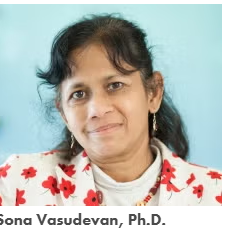
Founder and President
Dr. Sona Vasudevan
Dr. Vasudevan is an internationally recognized educator, researcher, and mentor in structural biology, bioinformatics, and network and systems medicine. She is currently a Professor in the Department of Biochemistry, Molecular & Cellular Biology at Georgetown University's Medical Center. She founded Georgetown's pioneering MD/MS dual-degree program and later established one of the first stand-alone Master's programs in Systems Medicine in the United States. These programs have earned international recognition through collaborations with institutions and organizations including Maastricht University, the University of Ljubljana, the Network Medicine Alliance, and the Repo4EU drug repurposing consortium.
For more than 20 years, Dr. Vasudevan has developed innovative curricula that integrate systems biology, bioinformatics, artificial intelligence, structural biology, and precision medicine. Her commitment to educational excellence has been recognized with multiple teaching awards, reflecting her passion for preparing learners to solve complex biomedical problems through interdisciplinary thinking.
Mentorship has always been central to her mission. She has mentored more than 120 graduate students, supervised research internships for over 50 students, and guided 20 students to become co-authors on peer-reviewed scientific publications. Her students have gone on to careers in medicine, biomedical research, biotechnology, and academia.
Driven by the belief that research training should begin long before graduate school, Dr. Vasudevan founded the Network & Systems Medicine Academy to create a global pathway for aspiring scientists, clinicians, and innovators. Through rigorous education, personalized mentorship, and authentic research experiences, the Academy empowers learners — from high school students to practicing healthcare professionals — to develop the knowledge, skills, and systems-thinking mindset needed to transform the future of medicine.
"
Welcome to the Network & Systems Medicine (NSM) Academy
Medicine is undergoing a profound transformation. Today's greatest healthcare challenges — from cancer and autoimmune diseases to neurodegenerative disorders and infectious diseases — cannot be fully understood by studying individual genes, proteins, or pathways alone. They arise from complex interactions across biological systems, requiring a new generation of scientists and healthcare professionals who can think across disciplines and connect the pieces.
The NSM Academy was created to prepare that generation.
Our mission is to provide learners at every stage — from high school students and undergraduates to graduate students, clinicians, and researchers — with the knowledge, mentorship, and research experience needed to thrive in this rapidly evolving field. We believe that authentic research should not be reserved for advanced trainees. Given the right guidance and opportunities, motivated learners can begin making meaningful scientific contributions much earlier in their educational journey.
What makes the Academy unique is our commitment to combining rigorous education with personalized mentorship and hands-on research. Our courses are designed not only to teach concepts but to develop critical thinking, computational skills, scientific communication, and the confidence to ask important questions. Every learner follows a pathway that leads from foundational knowledge to real-world research, working alongside experienced faculty and mentors.
Our vision extends beyond educating individual students. We are building a global community of learners, educators, clinicians, and researchers who share a common goal: advancing human health through network and systems medicine. Together, we can accelerate discovery, improve patient care, and help shape the future of precision medicine.
Whether you are taking your first steps into biomedical science or expanding an established career, we invite you to join us. We look forward to learning, discovering, and building the future of medicine together.
Dr. Sona Vasudevan
Founder & President
Network & Systems Medicine Academy
Board of Directors
A working board spanning academic research, graduate and workforce education, health policy, and computational biology — all drawn from Georgetown University and its research network.

Dr. Elliott Crooke
Professor, Biochemistry and Molecular & Cellular Biology · Vice President for Faculty and Academic Affairs, Georgetown University Medical Center
Molecular & Cellular Biology
Dr. Crooke's research spans two areas of cellular biology. The first is determining the molecular mechanisms that cells use to ensure their genome is faithfully replicated once, and only once, per cell cycle — loss of these mechanisms is one of the hallmarks of the onset of carcinogenesis. The second focuses on the physiological role cellular polyphosphates play in how cells respond to environmental stress. These long, energy-rich polymers are found in virtually all organisms; disrupting the gene that encodes the polyphosphate biosynthetic enzyme (PPK) leaves cells with decreased viability after exposure to heat, UV irradiation, oxidative stress, or prolonged stationary phase. Certain mutations elsewhere in the genome can suppress that sensitivity, and identifying them helps reveal which signal transduction and stress-response pathways polyphosphates participate in.

Dr. Caleb C. McKinney
Senior Associate Dean for Training, Program Development, and Academic Innovation · Professor, Rehabilitation Medicine, Georgetown University School of Medicine
Graduate & Workforce Education
Dr. McKinney oversees graduate education initiatives spanning recruitment, student success, career development, and workforce training across Georgetown's biomedical graduate programs. An internationally recognized leader in scientific workforce development, he has led numerous NIH-funded education and training initiatives focused on mentoring, interdisciplinary research, community engagement, and data science, and has served as Chair of the Board of Directors for the National Postdoctoral Association. He earned his B.S. from Cornell University, a Ph.D. in Microbiology from New York University, a Master's in Design Management and Communications from Georgetown University, and completed the Harvard Macy Program for Educators in the Health Professions.
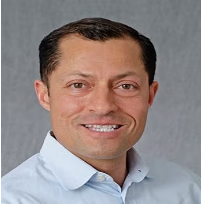
Robert Jarrin, J.D.
Adjunct Faculty, Georgetown University Medical Center
Health Policy & Regulatory Affairs
Robert Jarrin is a strategic adviser to several companies and associations on digital medicine and life sciences, representing clients on U.S. and international policy, regulatory, legislative, and legal government affairs. His areas of expertise include FDA regulation of digital health, CMS coverage and payment of digital medical services, ONC regulation of health IT, and healthcare legislative developments. He holds a BA in Government and Politics from the University of Maryland at College Park and a JD from Northeastern University School of Law.

Henry Walch, MS, Systems Medicine
Computational Biologist, Memorial Sloan Kettering Cancer Center
Computational Biology & Alumni Voice
Henry Walch received his Master's Degree in Systems Medicine from Georgetown University in May 2018 and joined the Nikolaus Schultz Lab at Memorial Sloan Kettering Cancer Center that September as a computational biologist. He collaborates closely with physicians to interpret tumor sequencing data and assess how molecular alterations influence cancer patient outcomes, and has presented his research at conferences including the annual meeting of the American Association for Cancer Research (AACR). During the summer, Henry mentors high school and undergraduate students participating in academic programs at MSKCC; in the fall, he helps teach the Critical Readings course in the Systems Medicine program.
Governance
The NSM Academy's Board of Directors provides strategic leadership and governance to ensure that the Academy remains true to its mission of advancing education, mentorship, and research in network and systems medicine. Drawing on expertise in academia, biomedical research, healthcare, law, and nonprofit leadership, the Board provides oversight, promotes innovation, and upholds the highest standards of academic excellence, ethical practice, and organizational stewardship as the Academy continues to grow and expand its global impact.
Want to see the researchers who mentor students day to day? Visit Mentors & Faculty.